 JAPAN GAMING & ENTERTAINMENT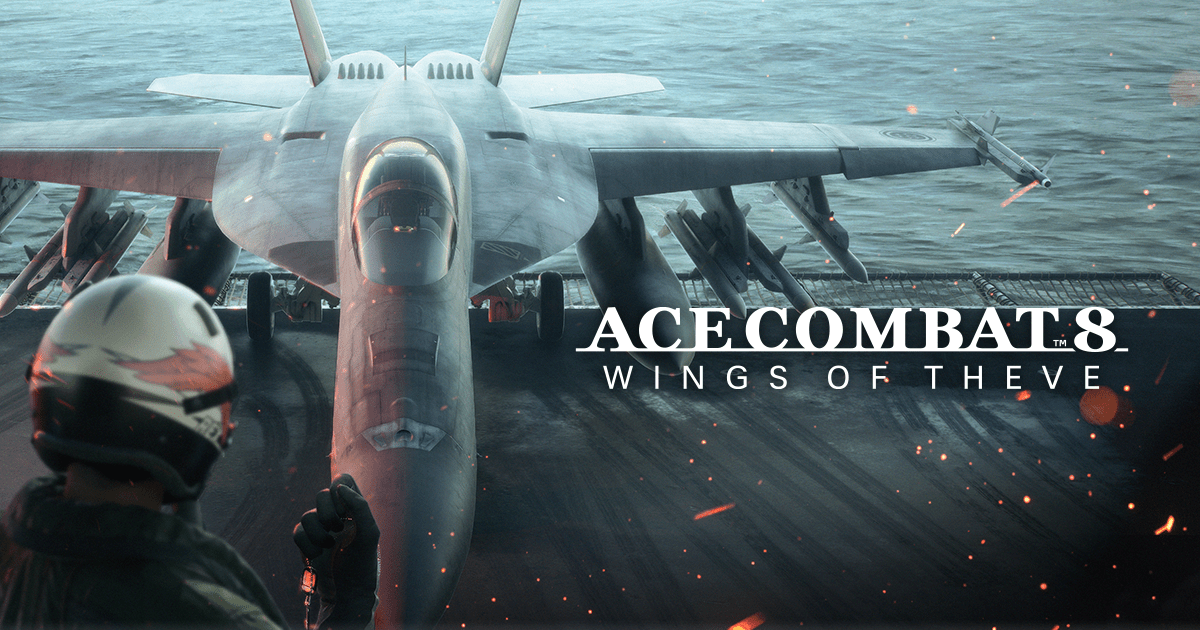
Mid-summer in Okinawa, a shotgun mic pointed at the sky, and no way of knowing when a jet would come. That is how part of the production of ACE COMBAT 8: WINGS OF THEVE was spent. Producer Manabu Shimomoto has described those sessions as hellish. Brand director Kazutoki Kono remembers one aircraft that obliged and flew right in front of them. A game about flying went to a real air base to get the sound of flying.
What your hands do here is simple to say: take a fighter up, shoot down enemy aircraft, and take apart the large targets. ACE COMBAT 8 arrives October 2, 2026 on PlayStation 5, Xbox Series X|S and Steam, with English text and English audio. Bandai Namco Aces Inc. is developing it, Bandai Namco Studios Inc. is co-developing, and Bandai Namco Entertainment is publishing. The last numbered entry in the series came out in 2019. So what has the team been doing since? The answer sits in interviews given in Japanese. Kono and Shimomoto spoke after a press hands-on session in June 2026.
The build started in 2020
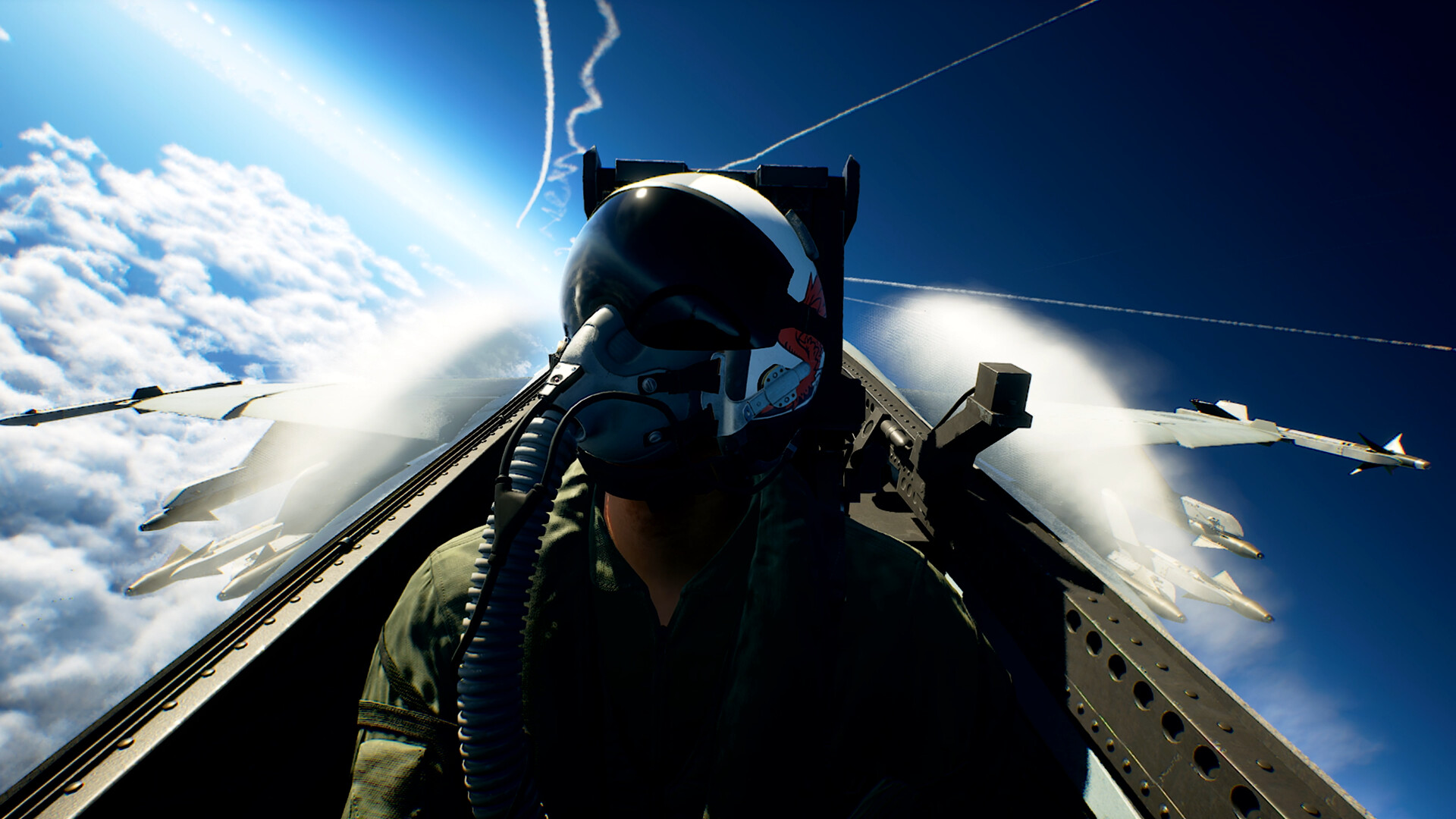
Kono and Shimomoto put the start of development — taken on because the last game sold well — at 2020, and its length at roughly seven years. Kono frames the plan not as evolution but as deepening what was already there. The part he decided not to touch is the experience of being an ace pilot — free flight, and the thrill of winning a dogfight. That stays. What gets rebuilt is everything holding it up.
Taking the lies out of the damage model
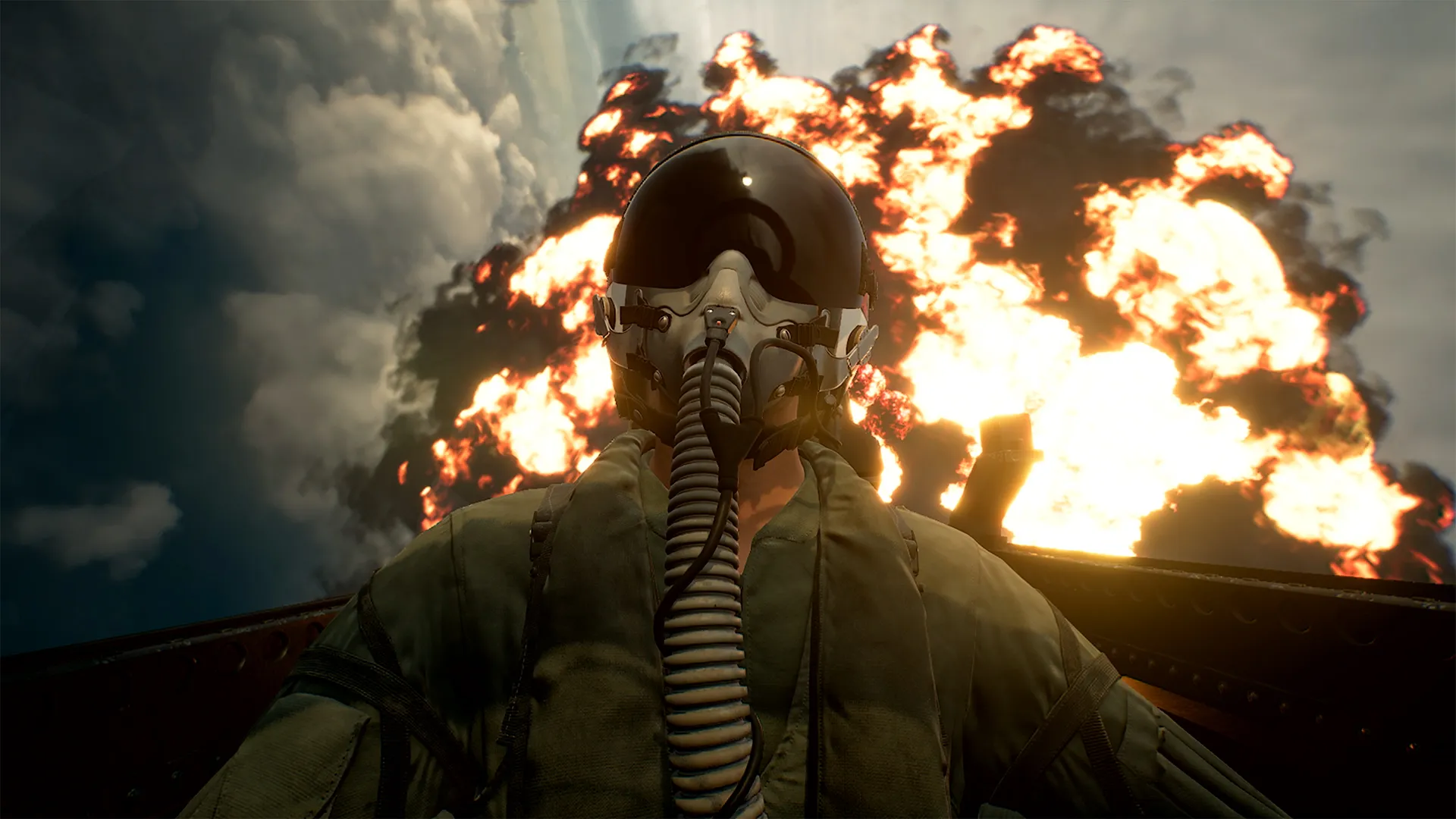
For that foundation Kono uses a particular phrase: getting rid of the lies a game tells. The clearest one is damage. In earlier entries, a large target only took damage at its containers, the glowing weak points the designers had placed on it. Rounds that landed anywhere else did nothing. ACE COMBAT 8 drops that rule. Hits on the structure itself register, the gun can grind a target down, and enemy ordnance that cooks off spreads damage to whatever is beside it. The team calls the result more intuitive behavior: what takes the hit is what breaks.
The weapons change with it. The gun has been strengthened; where it used to be the weapon of players who happened to like it, the team says it is now a genuine option. The upgrade system replaces the old cost-based limit with three categories of slots. Drop tanks can be hung under the wings, and they do nothing — no effect on performance at all, in there for the look of the thing. The team says its mechanical design staff pushed hard to get them.
They went and measured a real carrier
The same habit runs through the art. Every 3D asset is built at 1/1 scale. The map is 100 kilometers on a side, and the carrier floating in it is the size of a carrier. Those dimensions were not guessed at: the team visited a museum that preserves a decommissioned carrier and brought the measurements home with photogrammetry and laser scanning. The explosion sounds were recorded by setting off real charges. The trip to Okinawa belongs to the same policy — things that could have been built at a desk were fetched from the real object instead.
You are the one in the seat
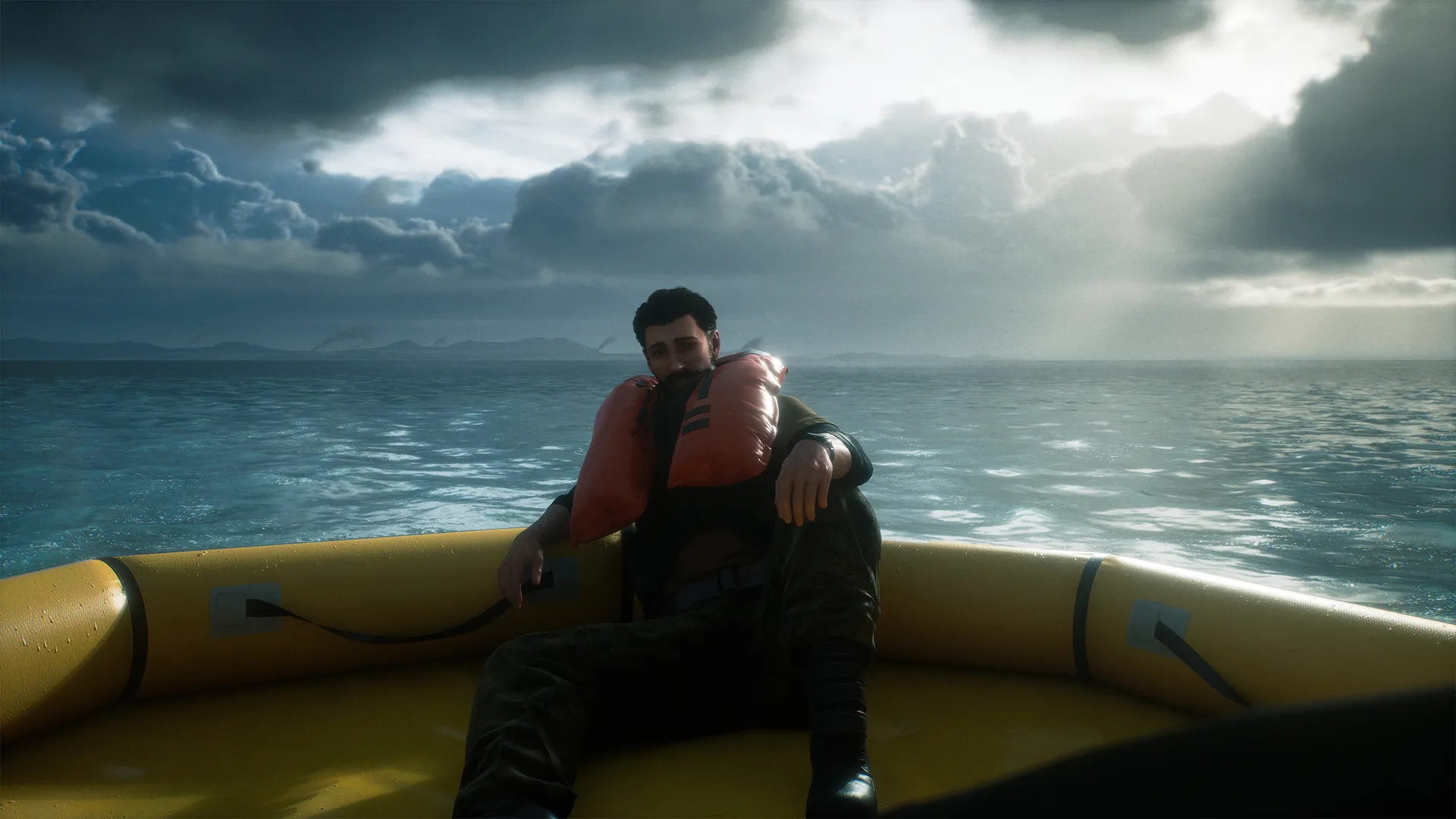
The presentation was reworked on the same principle. The cinematic scenes run in first person, meant to make the player the protagonist rather than a spectator watching one, and Kono says he directed the timing of the lines himself. The script is by Sunao Katabuchi, who directed the animated film In This Corner of the World, and this is the fourth game in the series he has written.
The subtitle comes out of that story. Theve is the capital of the Federation of Central Usea, the nation the Republic of Sotoa invades, and Wings of Theve is the callsign of Jan Cope, who leads Joker Flight, the unit the player is assigned to.
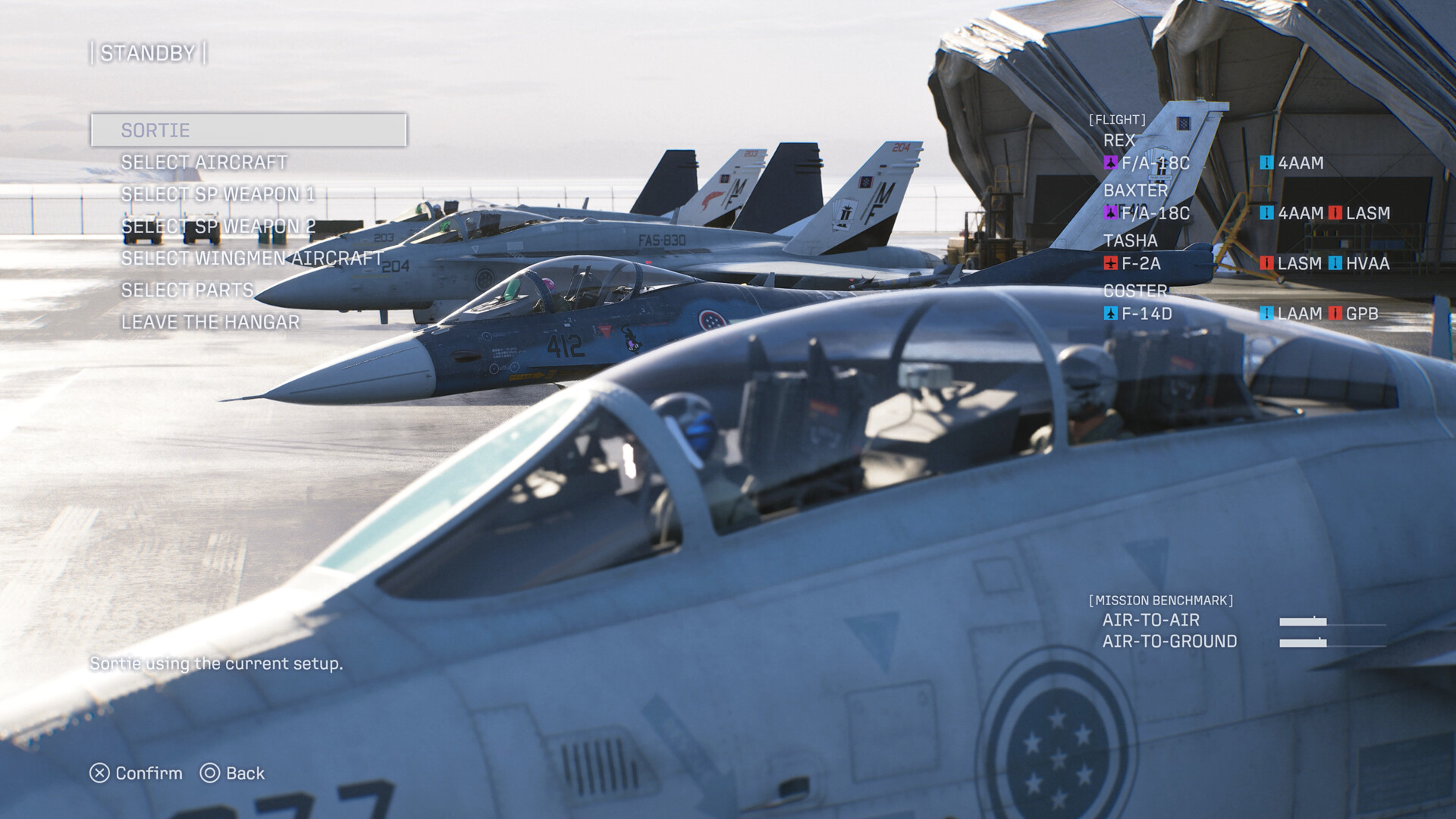
Before the sortie
The campaign runs about 25 hours, and there are three difficulty settings. The multiplayer side is called ACE COMBAT ONLINE, and it holds as many as 100 players in a single lobby. Two modes carry it: Co-Op Assault, the PvE side, where players work together against enemy forces, and Co-Op Warfare, which is PvPvE — players trade fire with each other while AI aircraft fight in the same airspace. It is the largest online component the series has had. Anyone who buys the Deluxe edition or above starts flying on September 29, 2026; everyone else on October 2.
What Kono refused to move is the feeling of flying where you like and winning the dogfight. What seven years went into is everything underneath it: damage that lands where you put it, a carrier measured off a real hull, and jet noise carried back from a base in Okinawa.
Sources: Bandai Namco Entertainment’s Japanese and English official sites; Bandai Namco Entertainment America; Bandai Namco Europe; GAME Watch; Dengeki Online; PlayStation Blog; Famitsu; PR TIMES; 4Gamer.net. Interview material translated from Japanese-language coverage.