 JAPAN GAMING & ENTERTAINMENT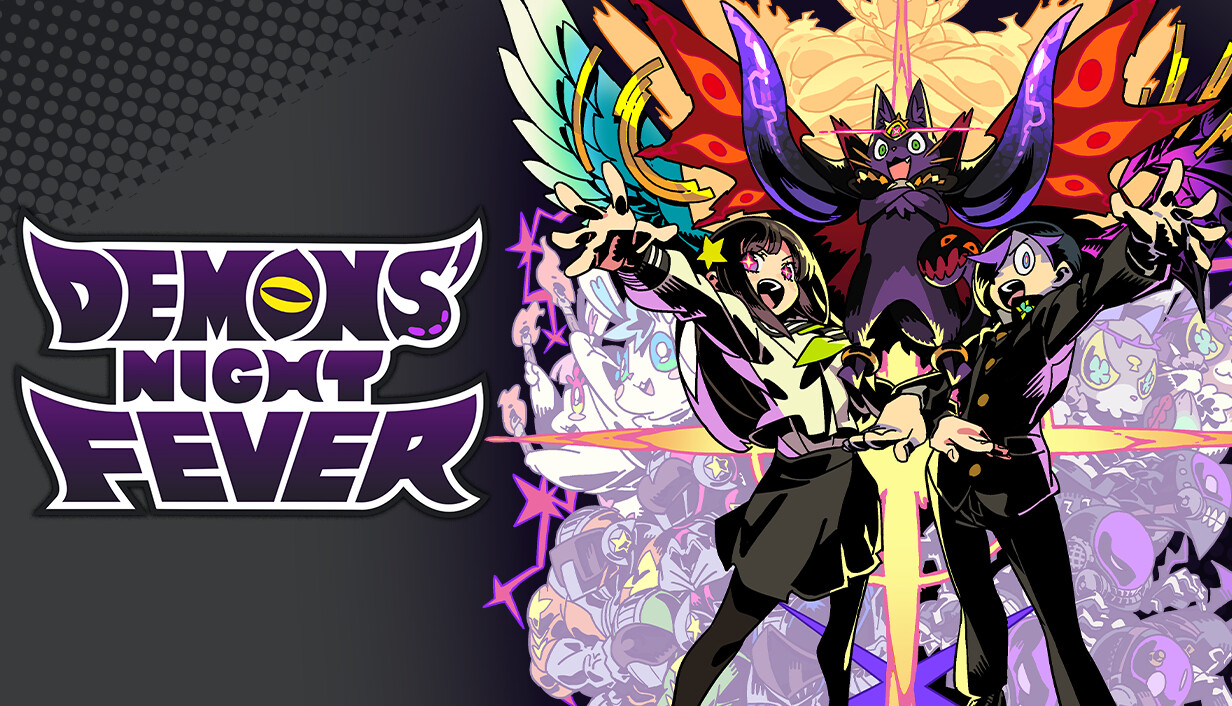
In the middle of a battle, you blow up your own allies. The minions you sacrifice come back stronger for it. The RPG DEMONS’ NIGHT FEVER officially calls this the Peon Exploitation System. It releases October 22, 2026 on Nintendo Switch, PlayStation 5 and Steam (PC), with English text and English voice acting.
Who has to do the killing for a Peon to come back stronger?
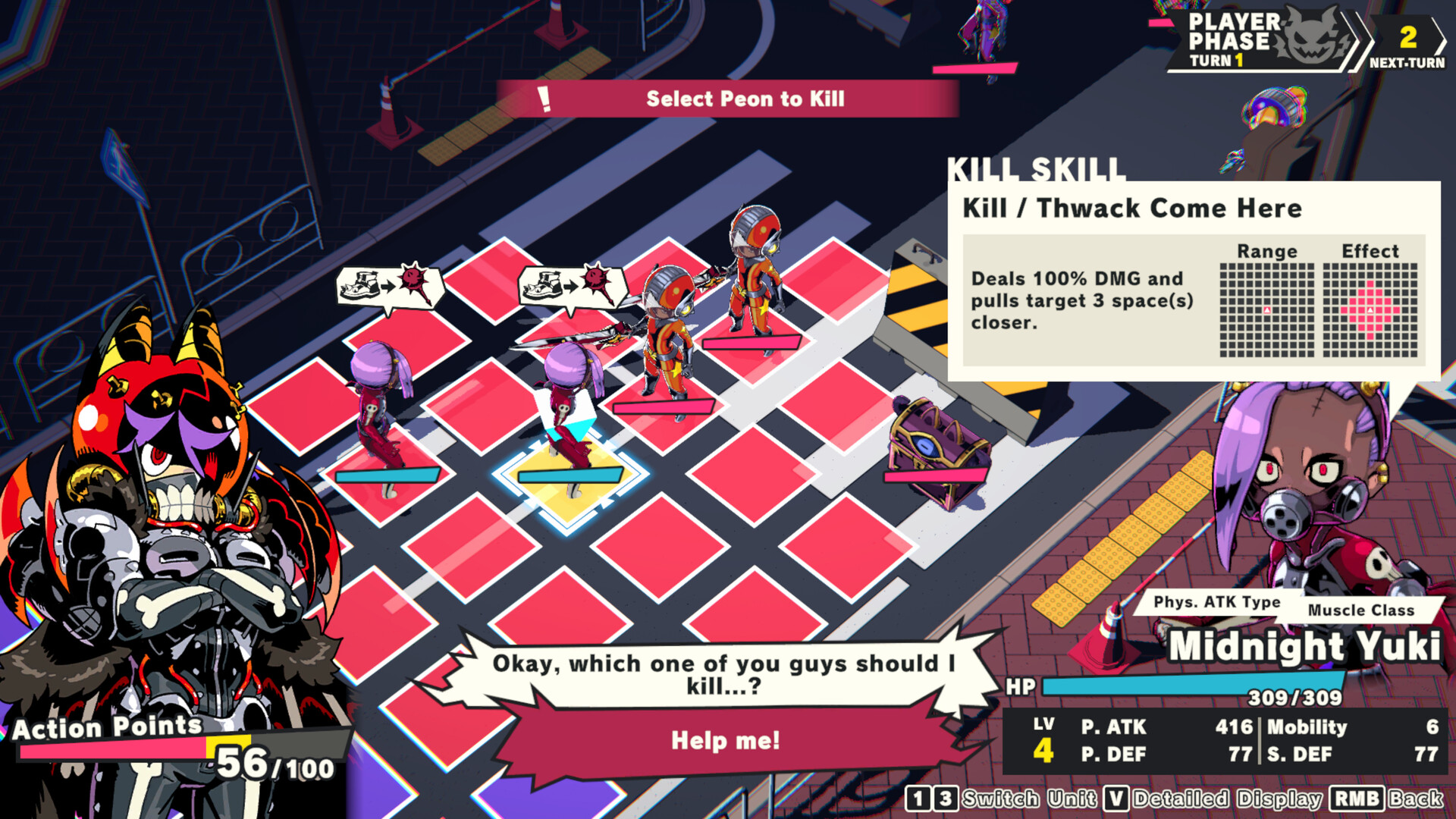
Those minions are the game’s Peons. Blow one up mid-battle and the blast wipes out enemies along with it. The more often a Peon is killed, the more often it reincarnates and the stronger it becomes. There is a condition, though: reincarnation only happens when the player is the one doing the killing.
Producer Sohei Niikawa explained in an interview how this differs from a Peon falling to the enemy. A Peon you kill yourself will, in time, reincarnate and come back stronger. A Peon killed by an enemy is lost: it does not reincarnate and simply disappears. Who gets put down, and when, decides how strong the army becomes.
Battle is not the only place to build them up. Perverse Points, earned through misdeeds, get poured into shady Abductions and Pillaging to train characters. But the time you have for all of it is limited.
In Japanese, the game’s official genre label is “stat-raising RTA simulation RPG.” RTA, short for real-time attack, means speedrunning. According to Niikawa, though, what gets cut down here is not play time but the number of days that pass inside the game. The challenge is to clear a run in as few in-game days as possible. Even so, he reckons a run comes in under five hours once you’ve mastered it. The game is built around repeat runs, and playing random dungeons and unlocking achievements let players start the next run faster and in better shape.
What age rating does a game about killing your own allies get?
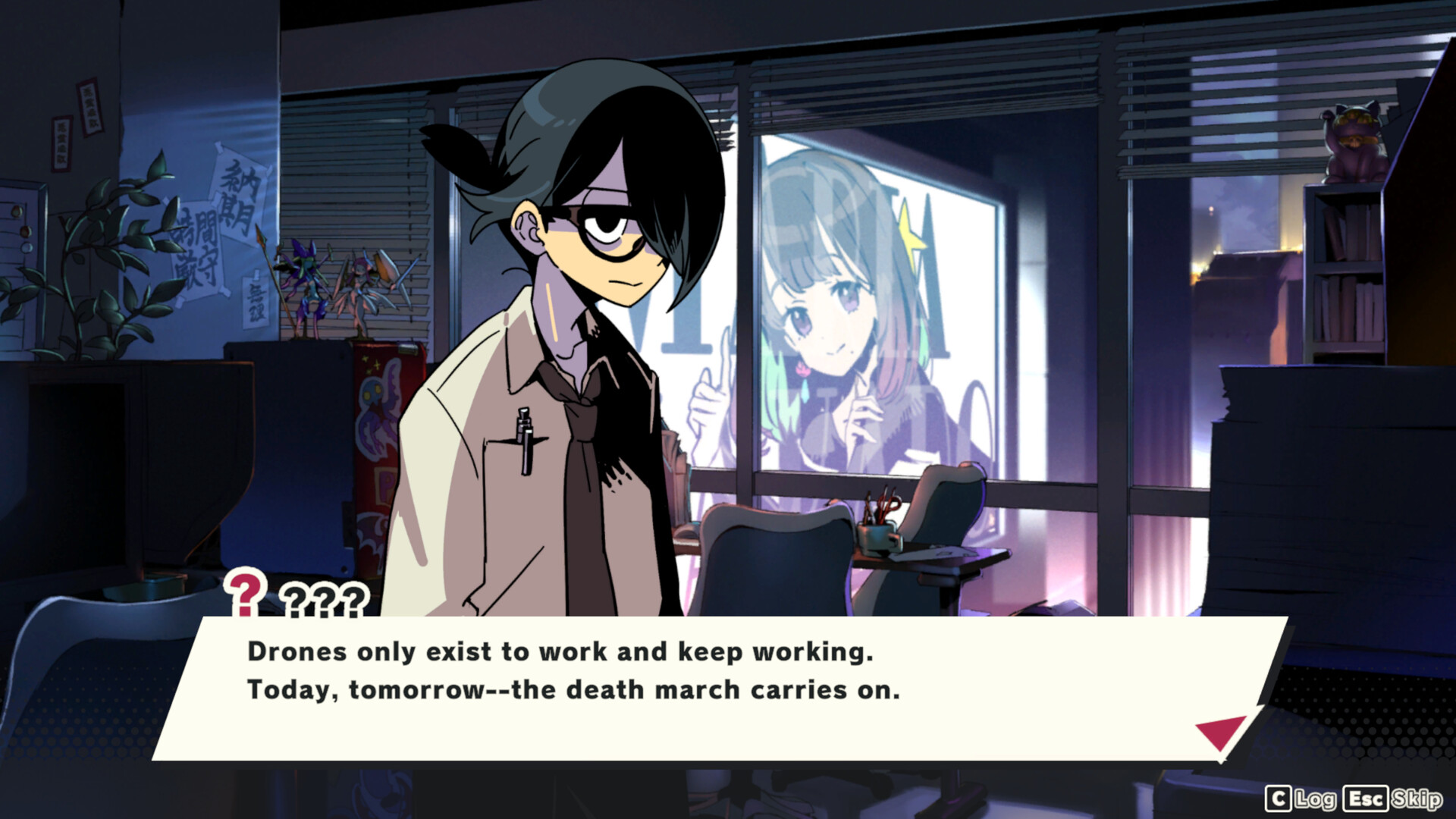
How much the game shows was a deliberate choice by its creators. CERO, the ratings body in Japan, rated the game B, the category for ages 12 and up. According to Niikawa, the mildest category did not fit the game’s concept, and he did not want to lean toward more graphic violence either. Steering clear of both extremes, the game landed in a middle ground that works as dark comedy, he says.
Every chapter redraws the art and rebuilds the interface
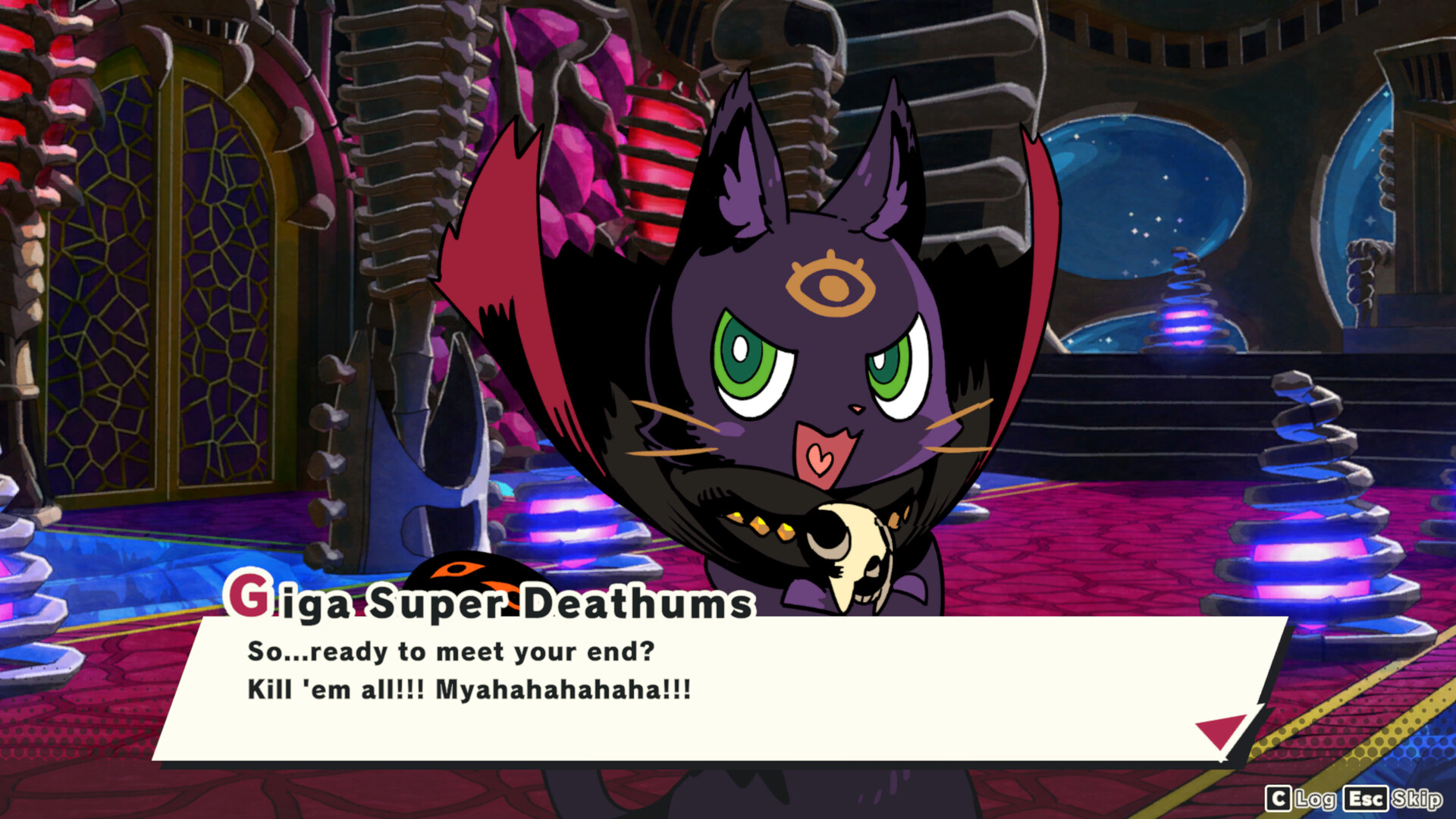
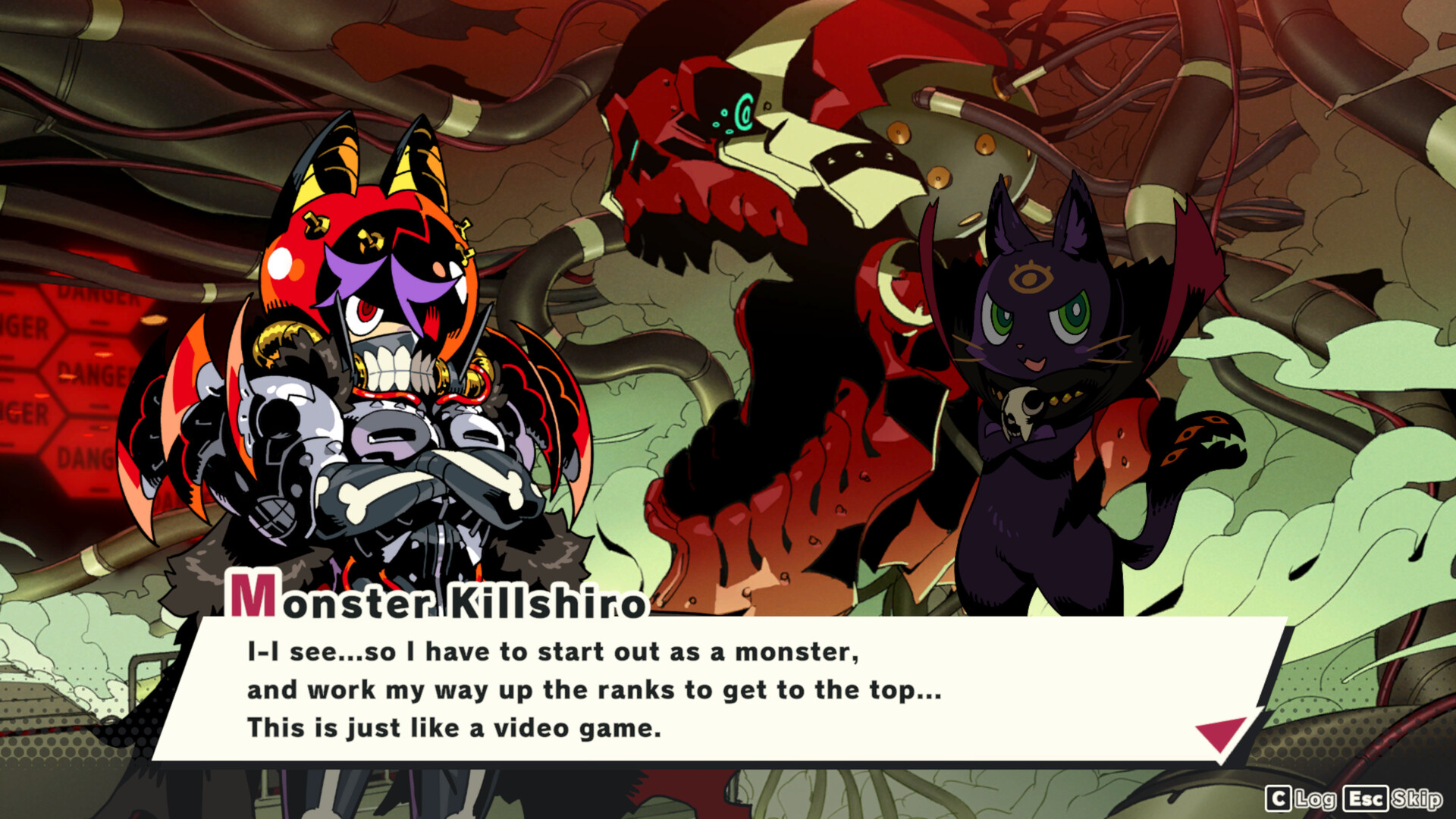
Each chapter has its own theme, and each time the theme changes, the same characters show up looking like someone else. Character designer Yuji Himukai got the same request for every chapter: make them so different that they had to be redrawn from scratch. The request came from Niikawa, who says he could tell from Himukai’s reaction that it was no easy job.
The art is not the only thing that changes. The UI is rebuilt entirely for each chapter, so what is on screen turns into something else every time you move to a new chapter. Some boss fights are set to vocal tracks. In a hero-themed chapter, for example, the boss fight opens with a song straight out of a superhero show, Niikawa says.
Made by the creator of Disgaea
Niikawa created the Disgaea series and served as president of Nippon Ichi Software. He now heads SuperNiche, a company he founded himself. He also wrote the original concept and the scenario, under the pen name Roman Kitayama. In a separate interview, Niikawa described SuperNiche’s policy as going all in on the reckless things a big company would never do. He added that what counts as niche does not differ by region, and that something interesting will be accepted anywhere.
That stance has a track record behind it. While at Nippon Ichi Software, Niikawa approached Nihon Falcom himself and closed a deal, pitching Switch ports and releases outside Japan as a single package. As a result, he says, Falcom titles grew to account for roughly half of Nippon Ichi Software’s sales outside Japan.
SuperNiche handles planning and production, Drecom handles development, and Arc System Works is the publisher. Himukai is on character design and Tatsuya Yano on sound, and the theme song, “Dropout,” is sung by syudou.
Development done, on to localization
As of July 2026, development of the game itself was complete and the project had moved into localization, Niikawa said.
DEMONS’ NIGHT FEVER was first shown in June 2025, on an Arc System Works stream. The release date and platforms were not announced until more than a year later, in July 2026. Expansion beyond the game itself is already under way. A novel is being serialized, written by Niikawa as Roman Kitayama and illustrated by Himukai, and a manga is set to run for eight installments.
Niikawa posts diary entries about the game’s development on his official X account.