 JAPAN GAMING & ENTERTAINMENT
Heroes from every FINAL FANTASY, from the first game to the sixteenth, come together here. And you won’t get them by pulling from a gacha. FINAL FANTASY RESONANCE, out October 22, is a turn-based RPG in which you meet the heroes’ Visions on your journey and equip them for battle.
The story comes from the first season of FINAL FANTASY BRAVE EXVIUS (FFBE), a smartphone RPG. RESONANCE keeps that story and its main characters, and rebuilds the combat and the way you get Visions. It is also the first FINAL FANTASY drawn in HD-2D, the style that sets pixel-art characters against 3D backgrounds.
It is coming to PS5, Xbox Series X|S, Nintendo Switch 2, Nintendo Switch and PC (Steam and Xbox on PC), with English text and voice acting, and it is a single-player game. The producer expects the main story to take around 30 to 40 hours, or around 60 to 80 if you take in the side content too. A free demo covering all of Chapter 1 is available now on Steam and PS5, and your save carries over to the full game.
How does a single battle play out?
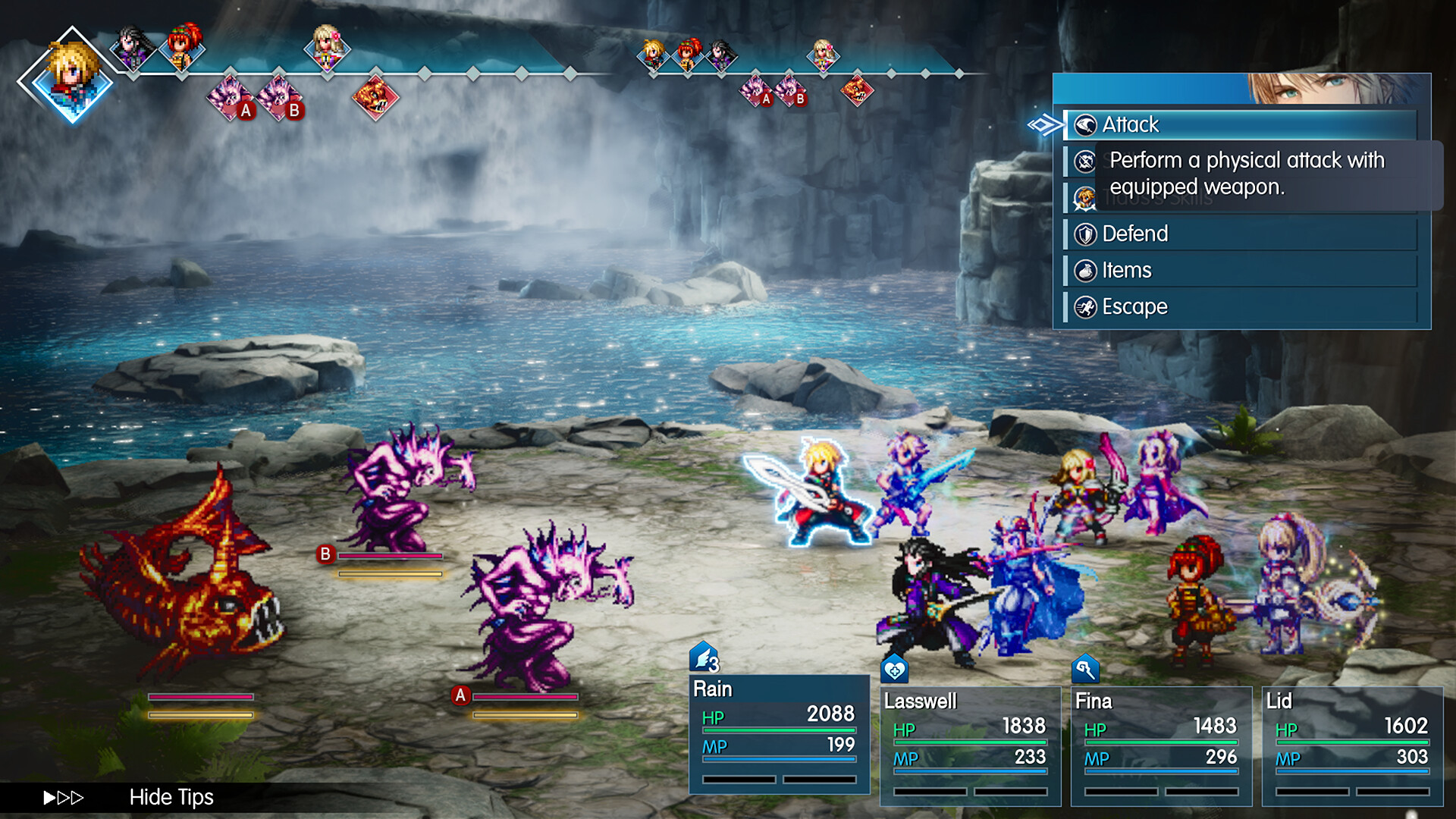
Combat is turn-based. A timeline on screen shows the order in which everyone will act, and you read it while choosing commands such as attacking, using a skill or defending.
The target is the enemy’s weakness. Below each enemy’s HP sits a second gauge, and every time you hit an enemy’s weakness, the gauge wears down. Empty it and the enemy is staggered: it can’t act that turn, and it takes more damage.
Stagger every enemy at once and an extra action comes your way. With a Vision equipped, you can use the extra action to choose and unleash a Resonance. A Resonance is a Vision’s special attack, and it shares its name with the game. The Warrior of Light’s Resonance hits every enemy with a physical attack.
The development team says FFBE chased the feel of playing on a smartphone. For RESONANCE, the team says it built combat around a single flow: stagger enemies, stagger them all, then unleash a Resonance. You choose from three difficulty settings and can switch at any point mid-game. Nothing asks for timed button presses, either.
Who are the 26 Visions?
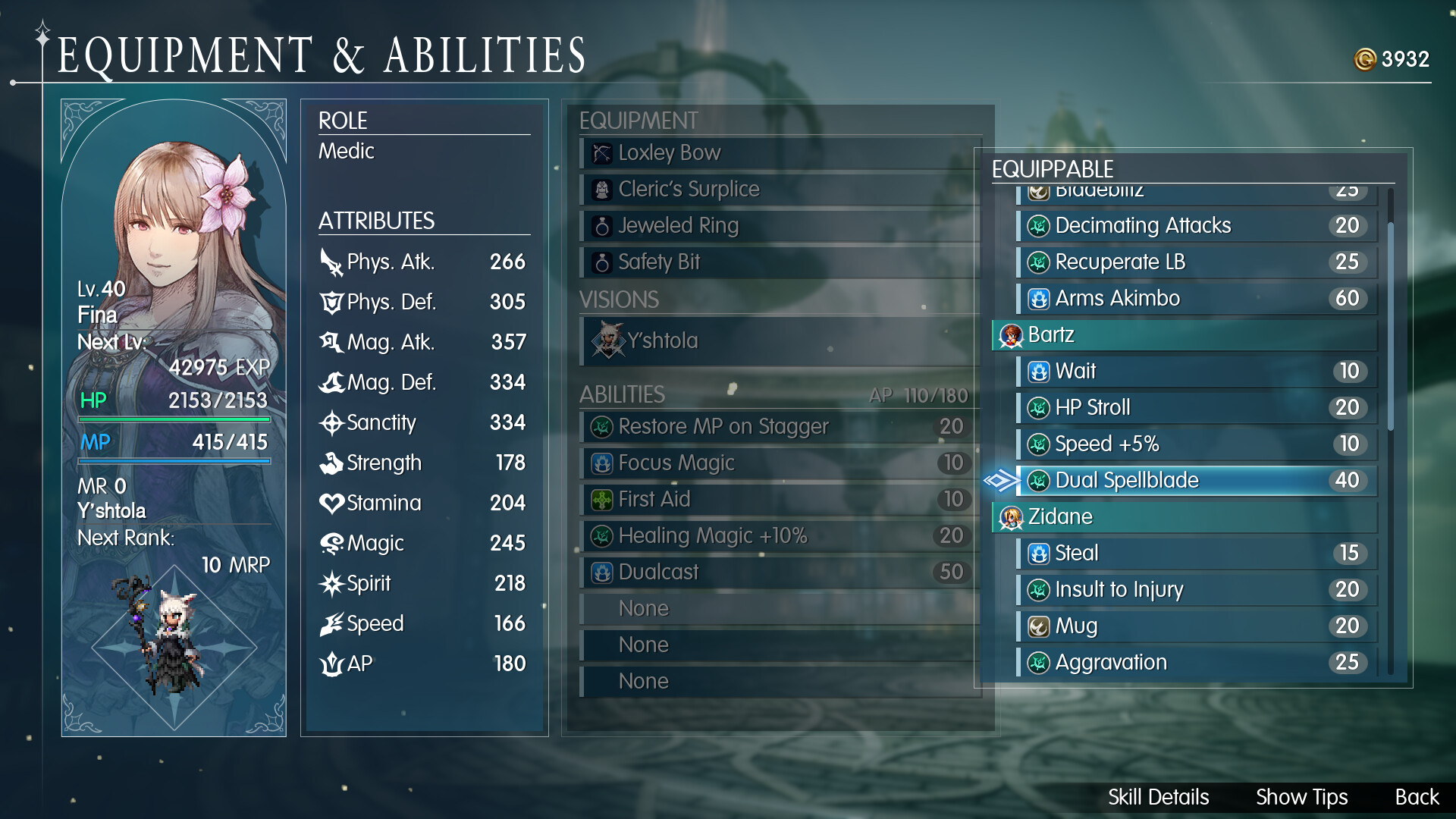
A Vision is a hero’s thoughts and feelings, crystallized, and each character equips one. According to the producer, there are 26 Visions, and 16 of them come from FINAL FANTASY through FINAL FANTASY XVI, one from each game. Most of those are protagonists: the Warrior of Light from FFI, Cecil from FFIV, Bartz from FFV, Terra from FFVI, Cloud from FFVII, Tidus from FFX and Clive from FFXVI, among others. The exceptions are Shantotto from FFXI and Y’shtola from FFXIV. The director says the rest of the Visions include characters from FFBE.
Raise a character’s mastery with the Vision they have equipped, and that character learns new abilities. Those abilities can stay equipped even after you switch to a different Vision. Bring magicite to a special moogle, and the Vision awakens, adding still more abilities to use. The development team says it drew on the job system of FINAL FANTASY V.
How far does the Chapter 1 demo go?
The demo runs from the prologue to the end of Chapter 1, and that chapter covers the same ground as in the full game. Levels are capped at 15, and mastery at 5. A preview by a Japanese gaming outlet put the demo’s length at around 4 to 6 hours.
Along the way, you obtain the Warrior of Light’s Vision and start riding chocobos. In a port town, that special moogle awakens your Vision. The chapter builds to a battle with an esper; win, and you can summon it, then sail on to the next land.
Your characters’ list of learned abilities looks set to grow with every Vision swap. And the Resonance you can choose on that extra turn should shift depending on who carries which Vision.
What was rebuilt for consoles?
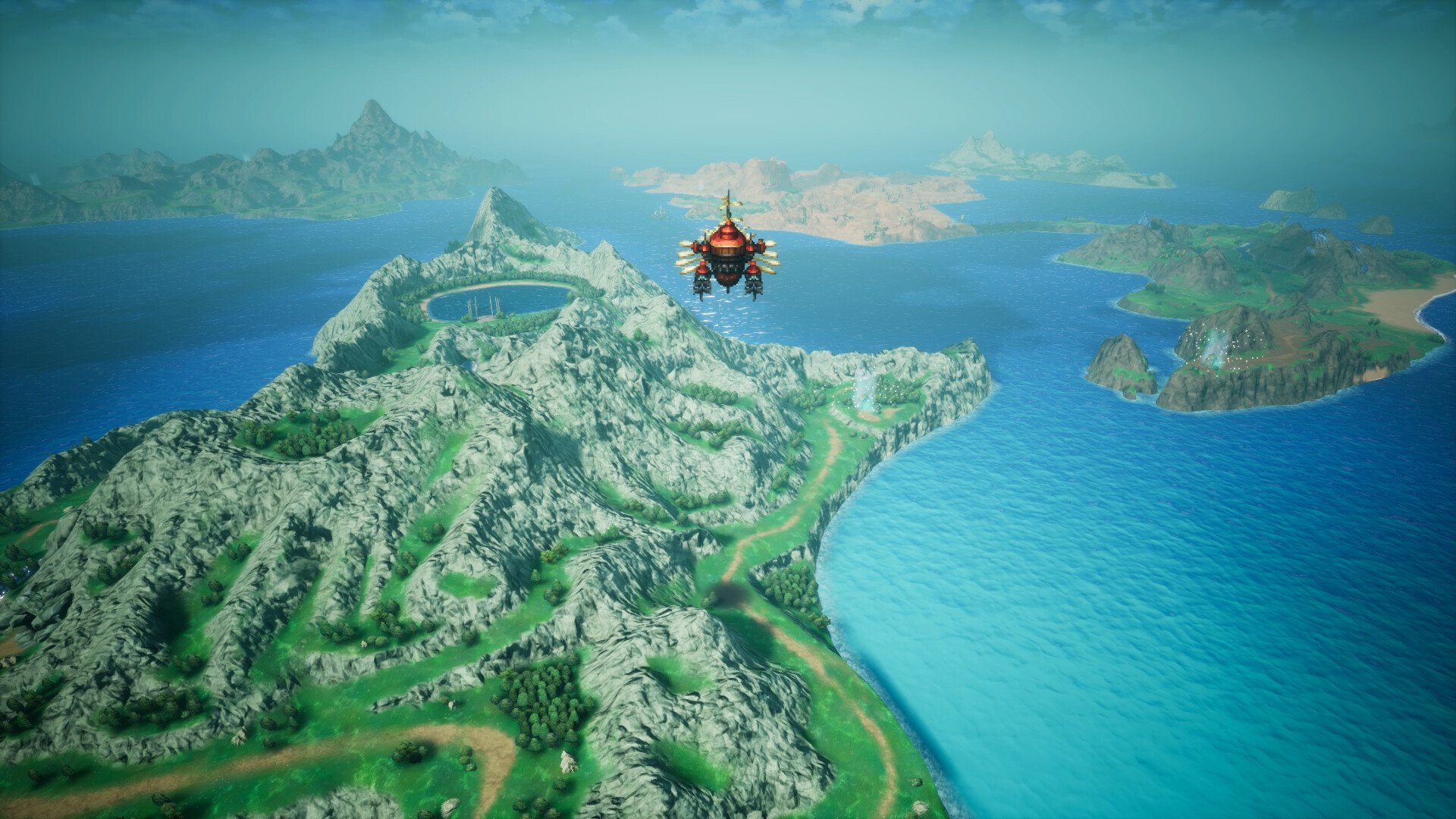
The world map is back. The director says keeping a world map was a goal the team set at the very start of development and would not give up. Ships carry you between continents, though you can’t sail them freely. The producer says there are quite a few places you can only reach once you have an airship.
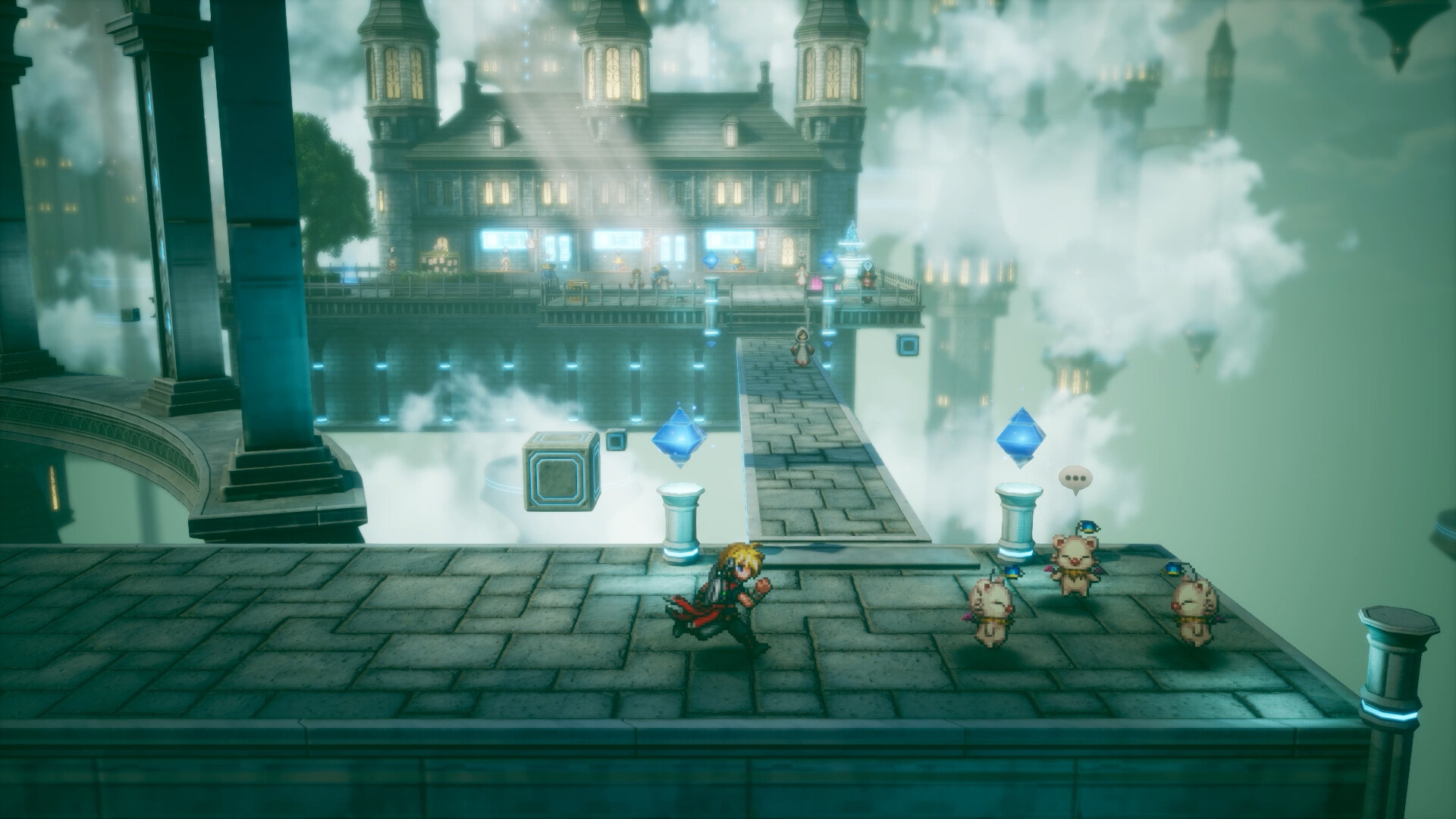
The characters look different from earlier HD-2D games, too. They are drawn with taller proportions, giving them a greater range of motion. The producer says the game was built on one idea: FINAL FANTASY as it might have been if it had kept evolving in pixel art.
According to the producer, only the broad outline of the story and the characters carried over from FFBE; everything else changed. Every line of dialogue and the plot itself were revisited. Bring FFBE’s pacing straight to consoles, the producer explains, and players would not get as immersed in the story or as attached to the characters. The director says the core of the story and its drama stayed the same, though parts of the scenario were reordered. The side quests are new.
Combat moved away from FFBE’s wave-based battles, and encounters and dungeons were retuned from the ground up. The way you get Visions changed too. They originally came from a gacha, and the producer recalls that this had to become the kind of encounter that suits a console game.