 JAPAN GAMING & ENTERTAINMENT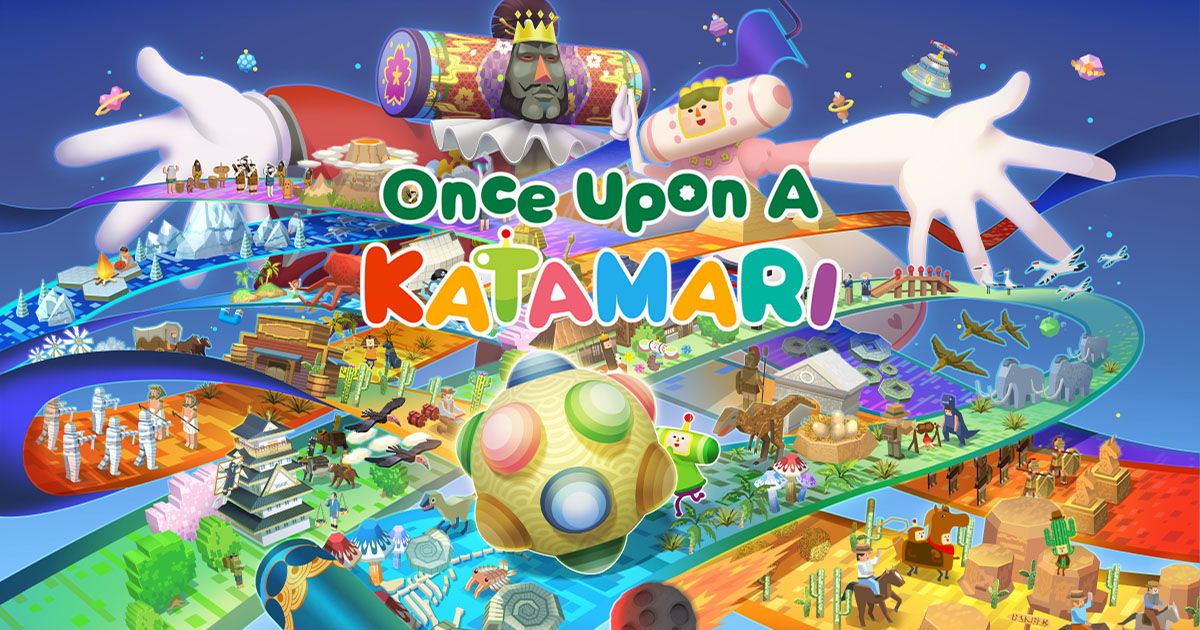
Roll the ball, and whatever it touches sticks to it. Everything that sticks makes it bigger, and the bigger it gets, the more of the world it can take in — the things that shoved it aside a minute ago end up stuck to its side. Once Upon A KATAMARI reaches Nintendo Switch 2 on October 8, bringing the game to a fifth platform about a year after it shipped on four others in October 2025: Nintendo Switch, PlayStation 5, Xbox Series X|S and Steam. The game includes both English text and English audio.
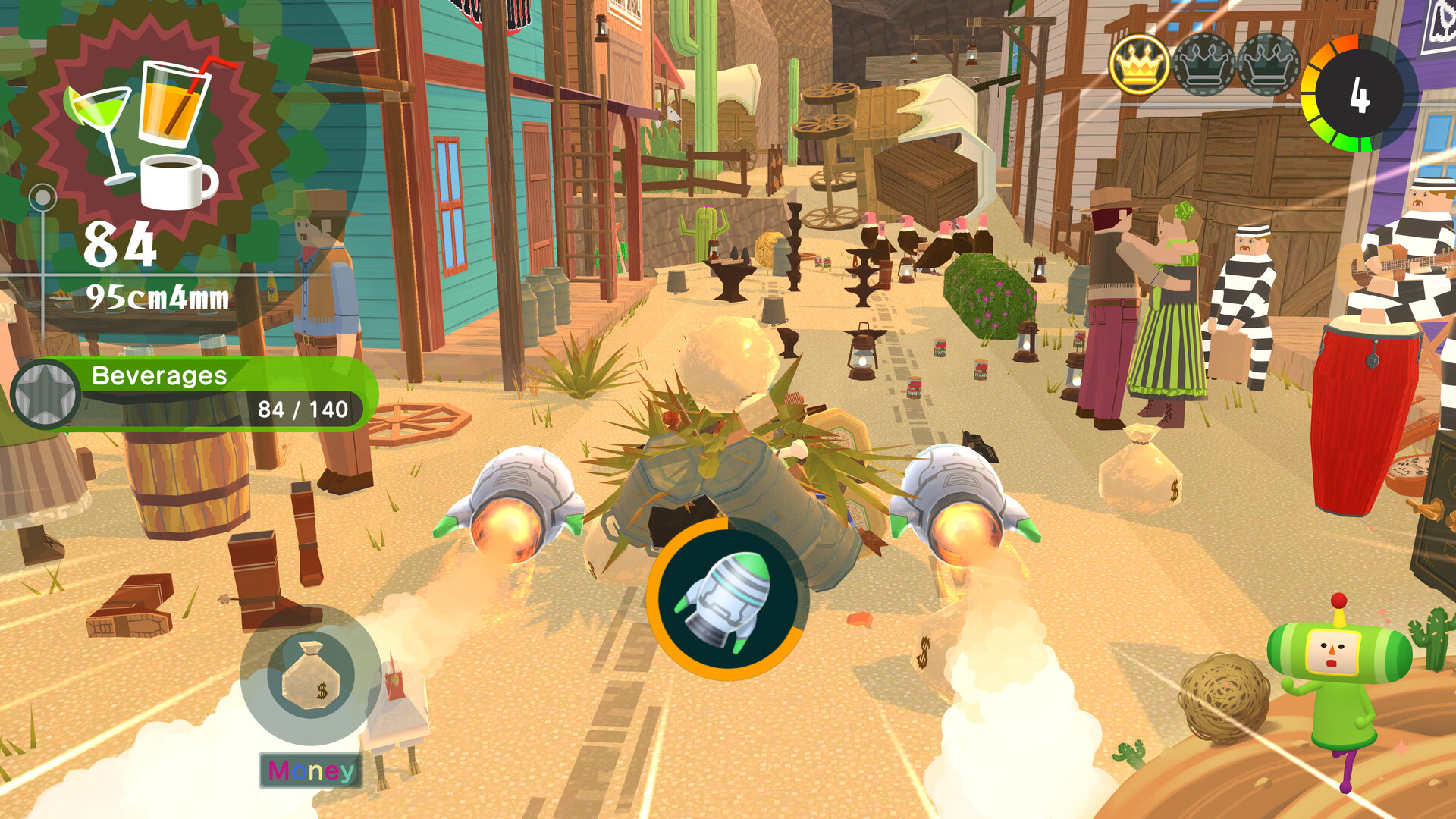
A stage is cleared at 1m80cm, or with eight philosophers
Each stage sets its own condition. On the pirate ship, the job is to grow the katamari to 1m80cm before the timer runs out. Ancient Greece sets a goal based on contents rather than size: roll up eight famous philosophers, Socrates and Pythagoras among them, and the stage is done.
Growth runs backwards too. A katamari that slams into something it is still too small to pick up — a person, an animal — or gets slammed into by one, bounces off and sheds part of what it was carrying. Half the work is knowing what to steer around until later.
Rolling up the right thing rewrites the stage. Roll up the octopus on the pirate ship and a Kraken turns up; leave it alone and a ghost ship arrives instead. After the ship goes down, the scene changes completely and rolling continues on the seabed. One stage, two ways for it to go.
The stages jump across time: a castle town in Edo-period Japan, the ice age, ancient Greece, the age of pirates, the present day. The eras are not backdrops. Clear conditions and set pieces are tied to them, and the eight philosophers are one example. One new support item, the Magnet, pulls nearby objects toward the ball.
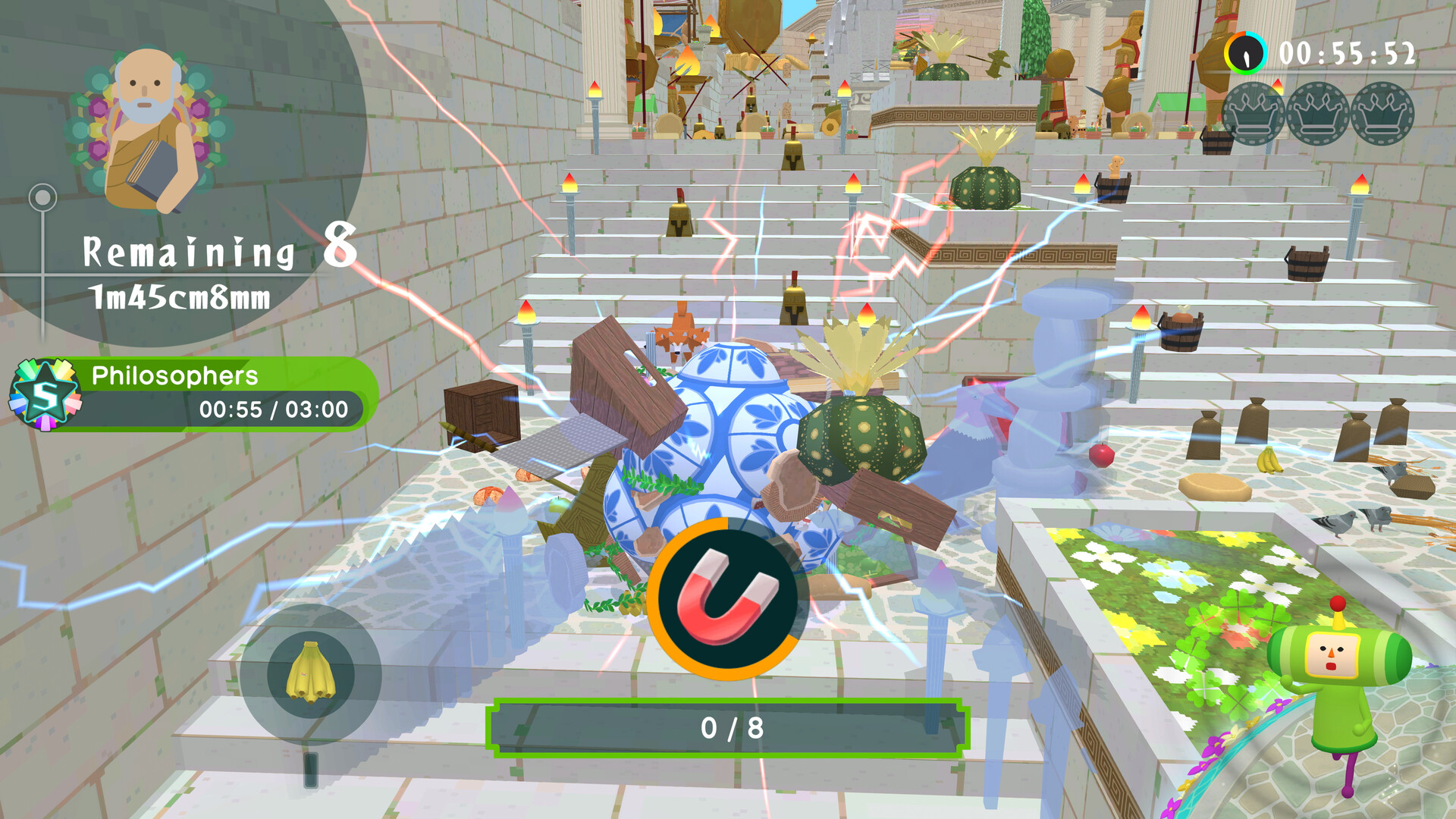
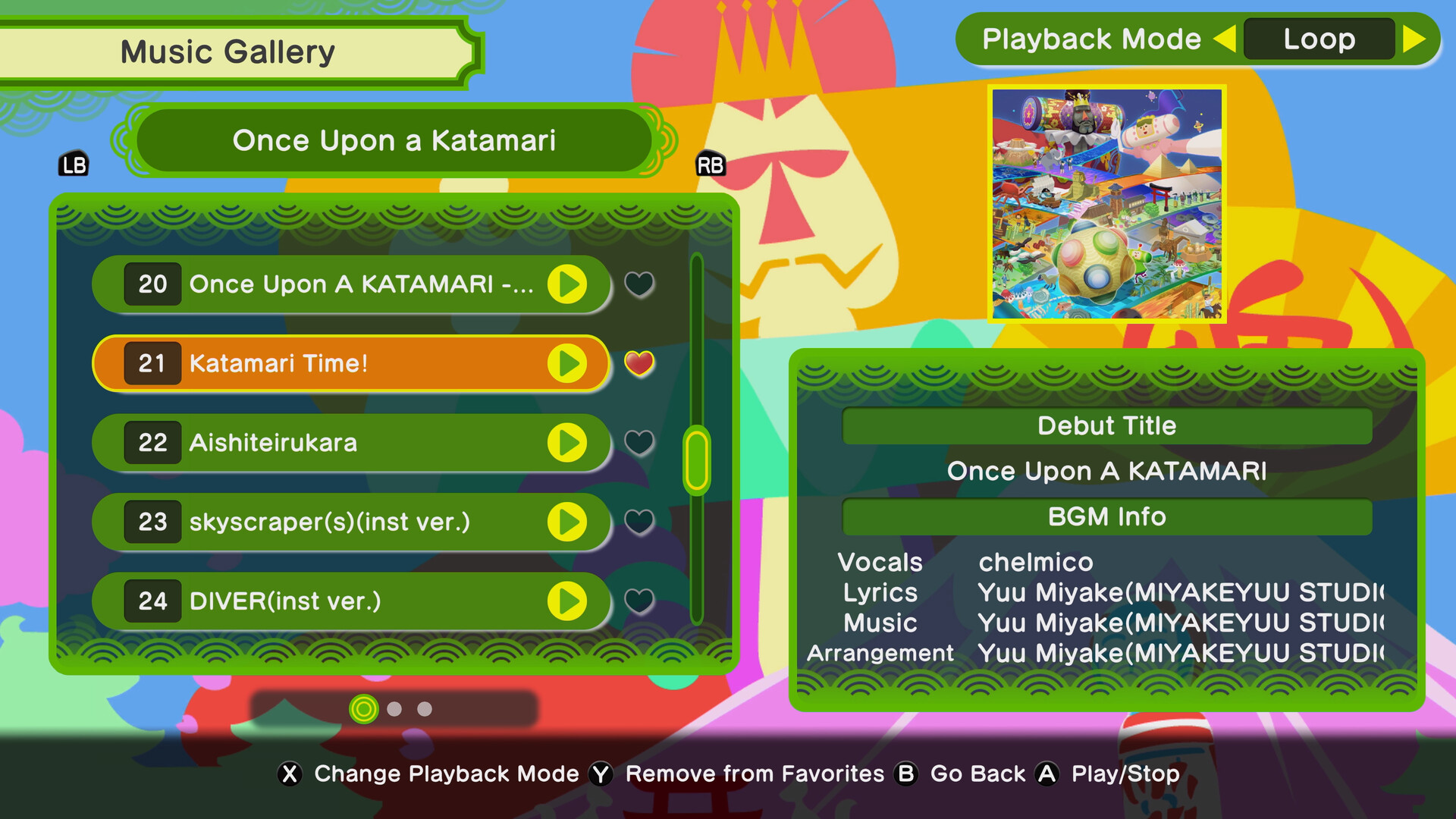
The Katamari sound team wrote the songs, and outside singers perform them
The songs are new. Producer Ryo Ishida of Bandai Namco Entertainment, who also worked on KLONOA Phantasy Reverie Series, has said the Katamari Damacy Series SOUND TEAM wrote and composed all of them, and that singers were then brought in from outside to perform them. The writing stayed in-house; only the voices came from elsewhere. Among the performers named are Shigeru Matsuzaki, Masashi Sada, and Saki Hanami of THE IDOLM@STER Gakuen, who sings “Katamari on the Doun”. Ishida has said every artist the team approached agreed to take part, which is how that line-up came together.
The studio behind it is barely older than the game
The series was created by Keita Takahashi. The developer credited on the store page for Once Upon A KATAMARI is a different outfit: RENGAME, based in Osaka. It was set up in May 2024, which makes the company barely older than the game it built, and its own site describes a core of former SNK staff joined by experienced specialists. Bandai Namco Entertainment is the publisher.
Handing the series to a new team meant first working out what the series is. During planning, Ishida and his colleagues sat down with employees who knew Katamari well, and the internal discussion about what makes a Katamari game a Katamari game is where the setting — the past — came from.
Ishida has said the hard part was never what to add; it was identifying what could not be touched. Roll, pick up, grow — interfere with the pleasure at the root of that, he has said, and it becomes noise for the player who came to play Katamari. The controls were left as they were. Items follow the same principle: support to make rolling feel good, not a requirement for clearing a stage, and a route to a higher score and rank for anyone who wants one. Story branches, he has said, are there to give players a reason to make a second run through the game. Work also went into the hub where stages are chosen, with the aim of making it a place worth walking around in.
A new home console entry had not appeared since Touch My Katamari in 2011 — 14 years. Ishida has pointed to the volume of messages from players saying they were waiting for another one, and to how well the remasters were received, as what brought the project into consideration.
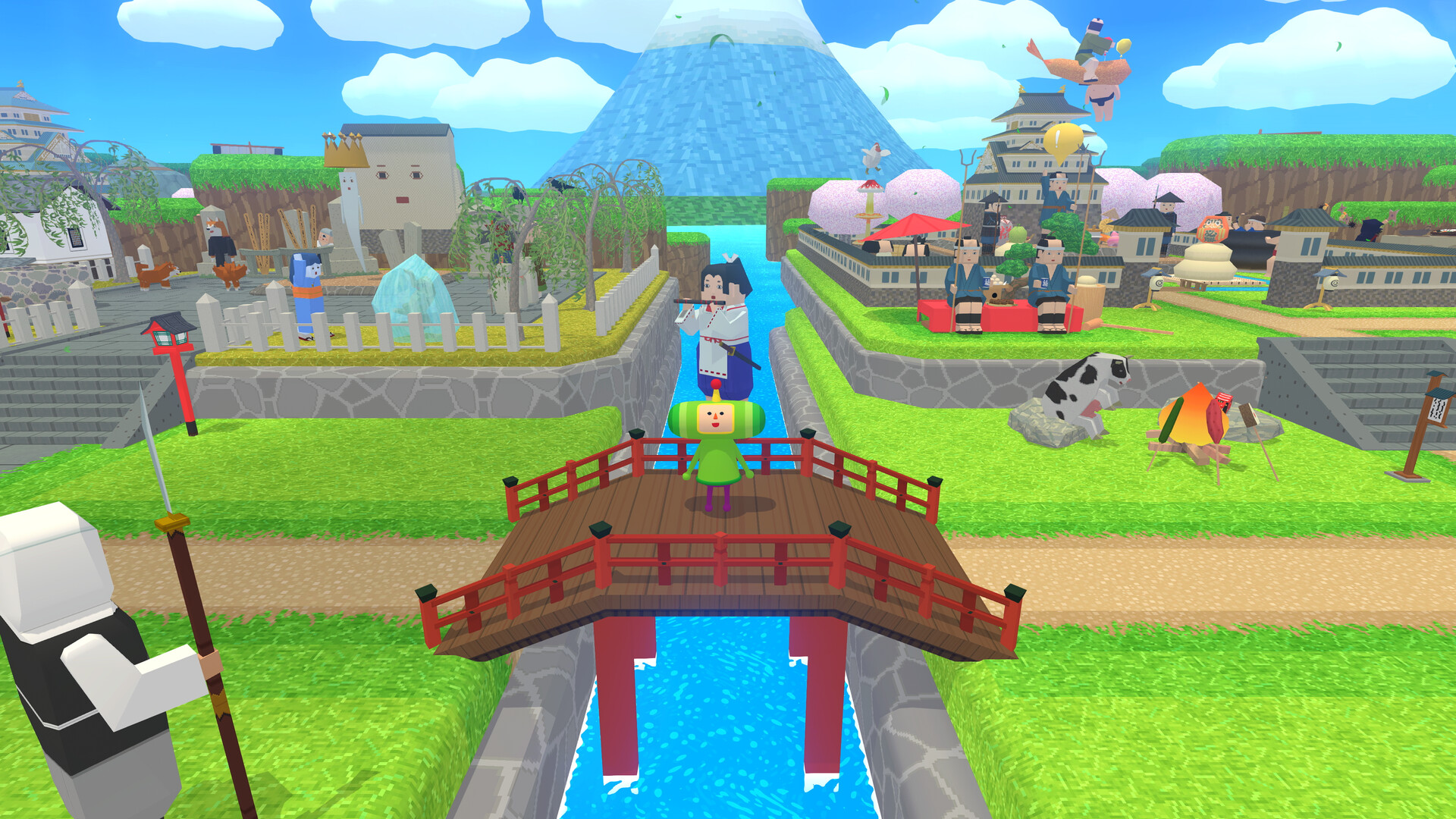
On Switch 2 the change is speed, and a mouse
The Switch 2 version arrives as a free update, and the differences are mostly performance: frame rate up to 60fps, and up to 4K (3840×2160) output in TV mode. It also supports mouse control, with one limit spelled out — mouse control cannot be used during online play.
October 8 also brings a new DLC, Rolling LIVE Highlights, and it is not a Switch 2 exclusive; it comes to several platforms. Inside are ten quests carried over from Katamari Damacy Rolling LIVE, six new Cousins, several accessories and several new songs. Since launch the game has already had the paid Katamari Damacy Series Neo Remixes, delivered in two waves, and a free update that added a three-piece set of DJ accessories.
New hardware, a new input device, new songs. Roll, pick up, grow — with a mouse in hand, the first thing your hands learn is the thing they already knew.
Sources: the official Once Upon A KATAMARI site and its Nintendo Switch 2 page (Bandai Namco Entertainment); RENGAME’s corporate site; Famitsu; GAME Watch; 4Gamer.net; gamebiz; Steam. Ishida’s remarks are translated from Japanese-language interviews.